Women have the power: united they cannot be defeated

Women have the power

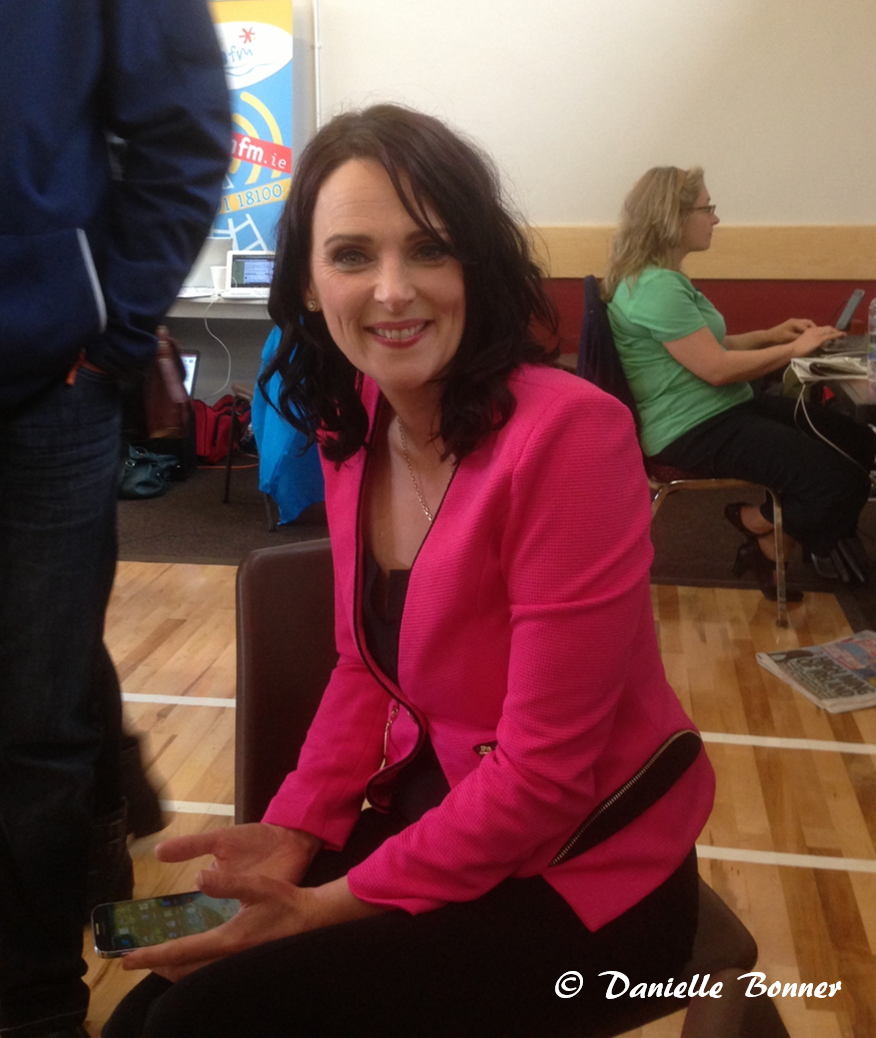
By Danielle Bonner

There’s a certain energy created when you have a group of women come together for a common cause, an energy that can lift your confidence and empower you to take on any challenge.

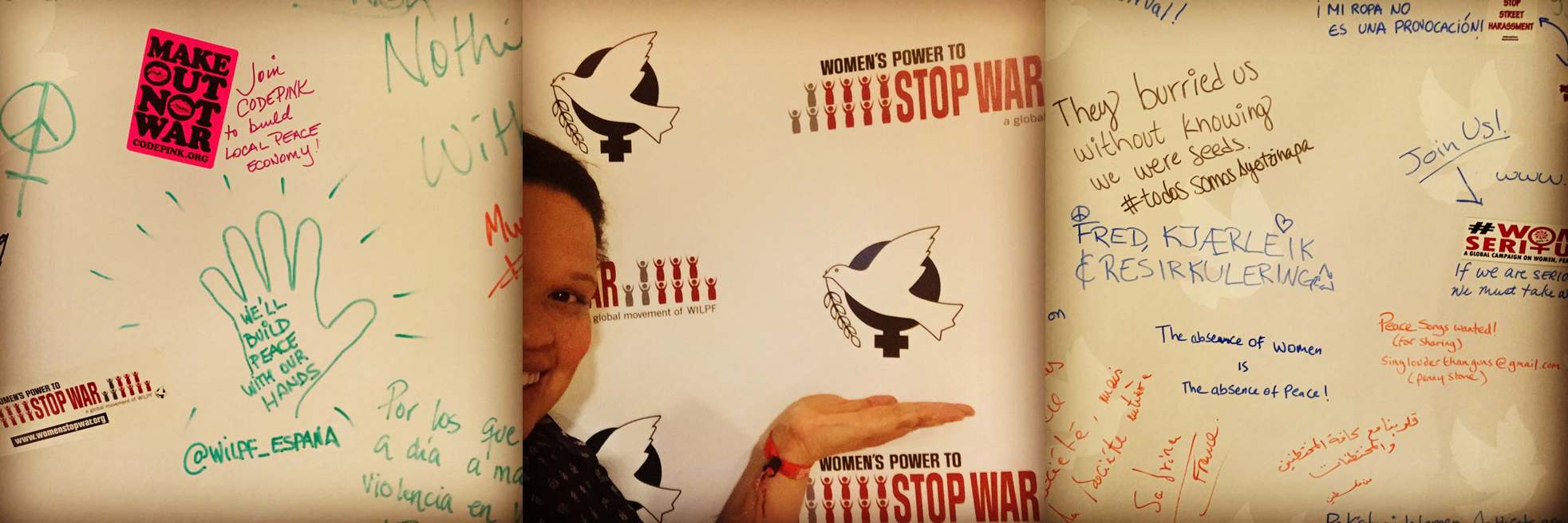
In April I attended the Women’s International League for Peace and Freedom (WILPF) 2015 conference, on women’s power to stop war. It was an extra special conference because it also celebrated 100 years since the organisations formation when 100s of women came together on 28th April 1915 at The Hague to call for the end of the First World War.

100 years on again some 1000 women came together from over 82 countries some travelling from ongoing conflict in their country such as Syria, Libya, Iraq, Ukraine, Afghanistan and other conflict war zones. To hear, share and discuss the ways we can end conflict and lay foundations for peace.

Over 3 days I listened and talked with women from all over the world, like Fatima from Pakistan whose supporting women in her country through the promotion off human rights and the use of technology.

The women from Syria who spoke of their everyday coordination with other women across the county to end the conflict and highlight the crimes being committed, to the women from Iraq and Libya highlighting their efforts against extremism in their communities.

On my last day I talked with Maureen an energized 83 year old from America. She’d been round the world twice on what she called borrowed money! Though she always paid back. In 1995 she travelled with 200 other women from Helsinki to Beijing on the peace train to be present at the 4th UN women’s conference, which produced the Platform for Action to support women, an agreement still in effect today which sets the framework to support the rights and empowerment of women.

 The diverse stories told by women were inspiring, empowering but also eye opening, while stories of conflict can be seen in the news, when you are sitting in a room with a survivor of conflict and you hear their personal story you cannot but feel a wave of emotions.

The issue of sexual violence as a weapon of war was a widely featured topic during the conference, one journalist from Colombia spoke of her kidnapping and rape at the hands of a militia, and while it was difficult for her to speak about her experience she explained she did so to bring a human face to the reality of sexual violence and the impact it has. Similarly a young women from Uganda and a victim survivor of the terrorist group Lord Resistance Army (LRA), spoke of the continual injustice victims of sexual violence faced in her country and the lack of support provided to them in the aftermath of experienced violence.

Commitment to action was also demonstrated, during the conference a lady from Yemen highlighted she found herself stateless because she could re-enter her country because of the recent imposed closed borders and international military airstrikes in Yemen. The next day WILPF prepared a statement for government action demanding the end to these imposed sanctions, which was hand then delivered by 20 women to 12 foreign embassy residing in The Hague who influenced the conflict in some form.
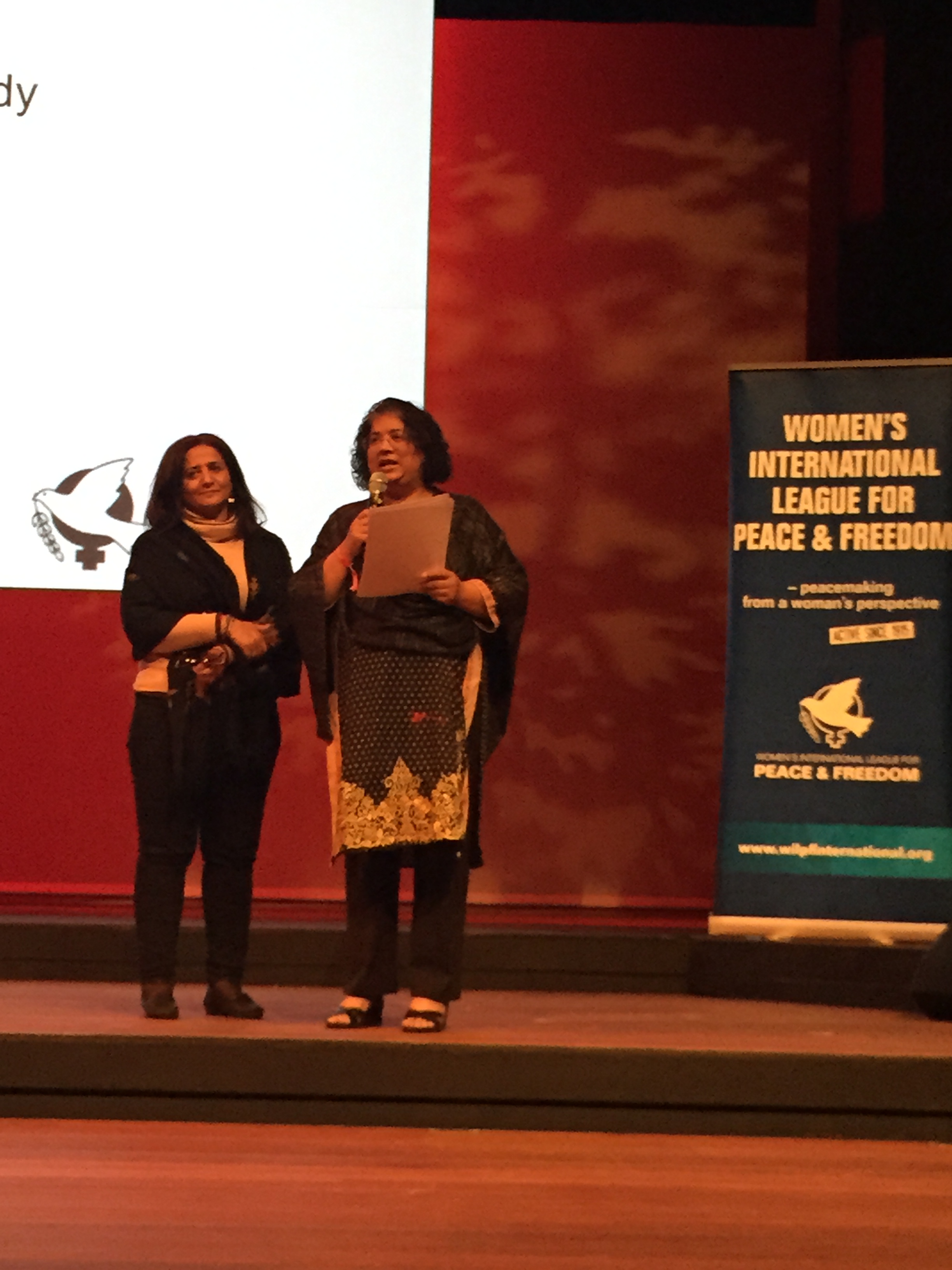
Amal Basha from Yeman and Sameena Nazir from Pakistan, calling for action to end conflict in Yemen

The actions of the women were reported in the media drawing awareness to the conflict and the realities people faced. This collective action is an example of the power and solidarity women have to create change. A solidarity I’ve seen in my own work in the women’s sector which connects locally and nationally to support women, raising awareness to issues effecting women’s lives, to the women’s groups across communities who provide friendly support relief for women in their communities.

The conference too highlighted the importance of sharing and giving voices to women’s lives, while it demonstrated the great leadership women have across our world’s communities. It brought voices to the many talented women working to end conflict and build peace in challenging circumstances.

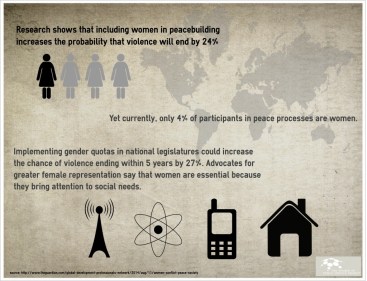
Research shows including local women in a peace process increases the chance of violence ending by 24%. Yet despite this research women find it particularly challenging to even gain a seat or have their voices heard at peace negotiation tables, further allowing women’s rights to be under prioritised and omitting women from having any input in peace process and decisions affecting their lives as women. Women in Peacebuilding
Women’s security, rights and political inclusion are common challenges face by women in conflict and post conflict environments. It is therefore vital that we ensure international laws such as the UN Resolution 1325 and other agreed human rights and laws are not only implemented but continually developed to ensure women are protect and have a voice in peace processes.

The Women’s Power to Stop War conference provided an international platform for women to come together to share work, ideas and empower each other particularly youth women to address and play an active role in bringing war and conflict in our world to an end.

And while the many may never no their names or hear about the great work these women are currently doing they are the silent backbone to peace in our world. They prove we can and should all do something to unmask injustices & create change in our world.

Democracy should never be taken for granted

Picture vote

Much focus is placed on the importance of holding elections in societies dealing with the aftermath of conflict because it is seen as a positive step in the development of democracy, which is held as the political way to move on from conflict to peace. As a person who supports the development of peace and democracy in post/conflict societies I thought it was about time I engaged in my own local politics and observe just how elections happen in a society that is considered stable and at peace!

An edited version of this feature entitled “Tea, Laughs and Politics” was first published in the Donegal Democrat Paper on Thursday 5th June 2014.

For a number of years I’ve gained a growing interested in politics yet I’d failed to use my democratic right to vote, in 2014 however I learnt to no longer take my right for granted.

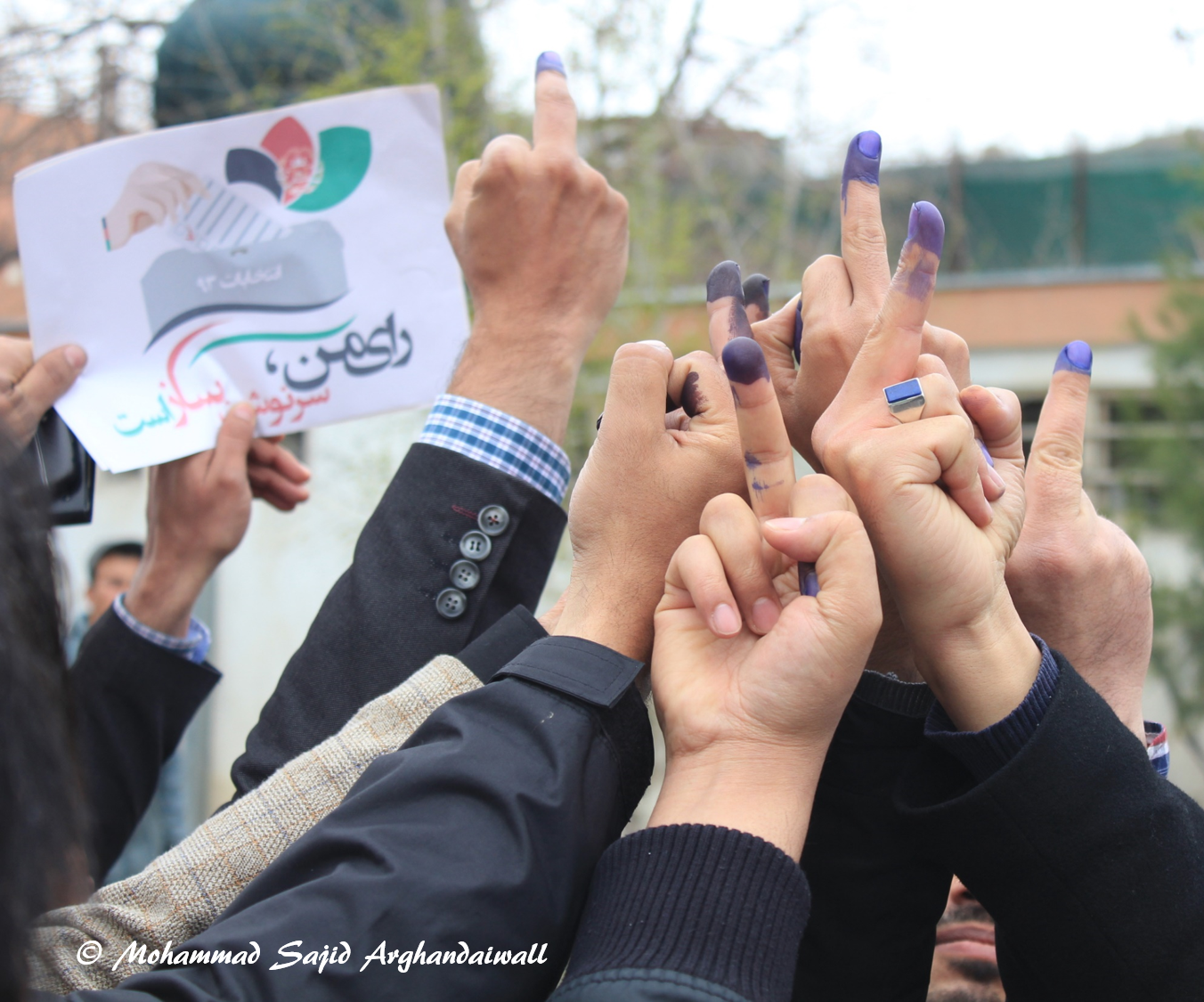
My awaking came from over 3500 miles away through enthusiastic friends in Afghanistan who were getting ready to vote in the April 5th presidential elections, the first time in 12 years that Afghan’s had the opportunity to elect a new head of state. For months friends had expressed excitement at having the opportunity to be voting as for many it would be the first time they would be voting. And when Election Day arrived my facebook newsfeed was filled with friend’s pictures showing queues of Afghan’s outside polling stations and ink dyed finger indicating that they had voted.

voting AFG pic

Afghan’s proud to show they voted

I was inspired by such scenes and compelled to think about my own civic duty, realizing I was taking my own democratic right for granted and leaving others to decide who would represent me in local government. I therefore decided no longer could I be an absent voter when many of my friends in other parts of the world were putting their lives at risk just for expressing a democratic right.

Having worked on the NCCWN-Donegal Women’s Network Election Special I knew I wanted to vote for candidates that understood equality and the issues faced in Donegal. Five of the sixteen Donegal electorate area candidates had responded to the networks equality questions which first made me pose the question do candidates who already hold some level of power and influence care or even hold other people’s equality in high regard? It was sad to see equality didn’t seem to be high on the agenda of many candidates, but it did make me realise who I wouldn’t be voting for on Friday 23rd May.

On Sunday 25th May 2014 I was then given the opportunity to observe the Donegal vote count at the St. John Bosco Community Centre, a new and insightful experience. There were 37 council seats to be filled six of which were to come from the Donegal electorate area.

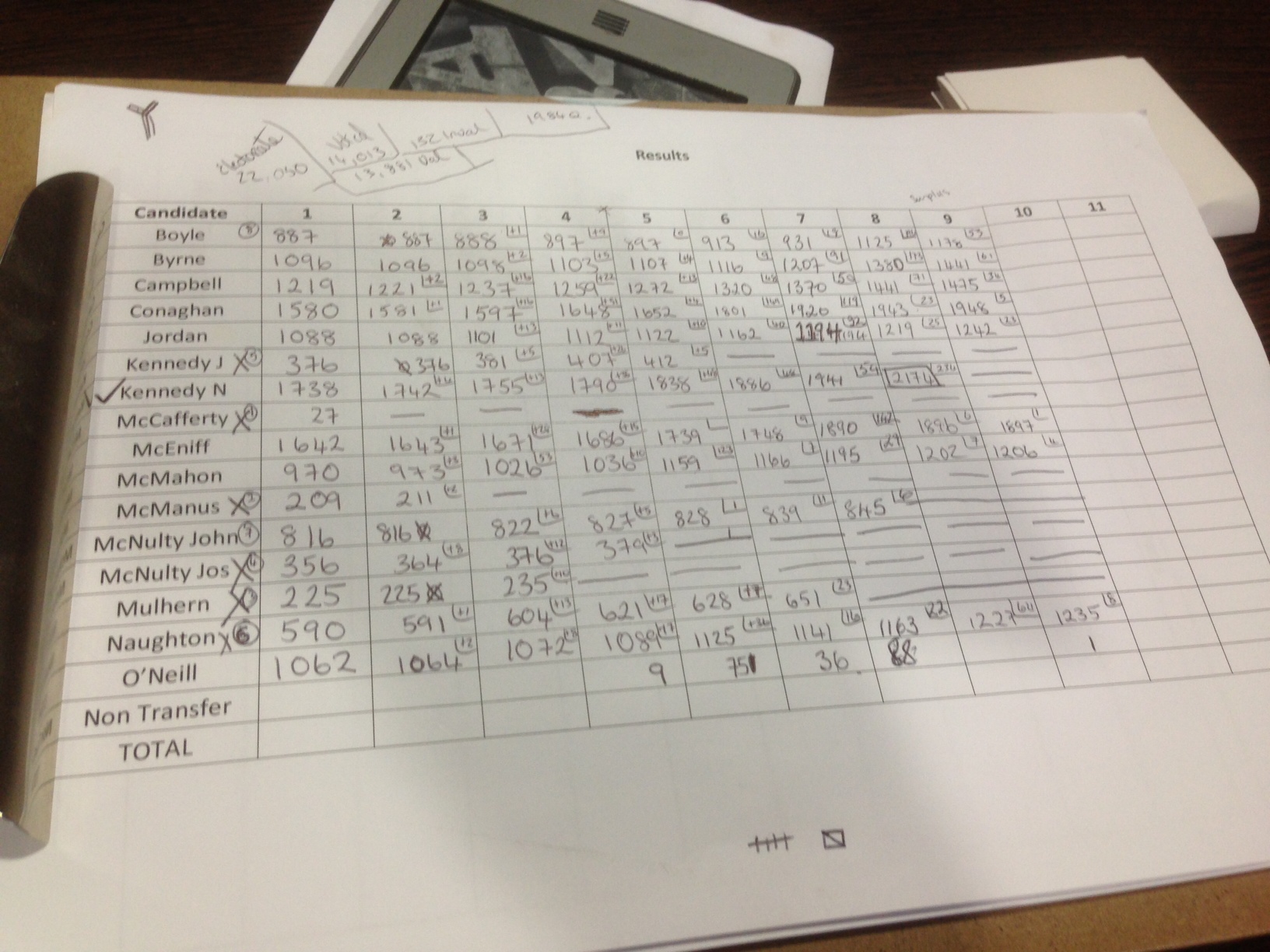
I wasn’t sure what to except arriving at 3.30pm I thought I‘d missed everything but the count was yet to start. The first count was read at around 4.20pm with a vote quota of 1984 however no candidate had reached the quota. Because local elections in Ireland work by Proportional Representation the candidate with the lowest votes was eliminated and their votes carried over to the second preference candidate, a process carried out until the six candidate’s seats were filled.

photo (39)

Counting Votes

NK blog

Leading Lady, Niamh Kennedy

The first elected candidate came at count 8 with Niamh Kennedy, for me her election was a positive boost to local politics, not simple because she is a woman only 1 of 3 elected in Donegal but also because she was a first time candidate elected receiving the highest votes over candidates who were sitting councillors. Her election serves as a positive example to any budding politician thinking about running for future elections. The same could be said of Candidate Tom Conaghan who had ran in the last local election and only lost by a few votes, yet he came back and received the second highest vote preferences.

What have I learnt?

Elections are challenging, exciting and every vote counts. While we also have to take the bad with the good, the fact is people won’t always 100% agree on who’s elected but the point is we must ensure that the way people are elected is fair and democratic which therefore requires the public to vote.

In Donegal the voting turnout was 58.21% representing 73,096 out of an eligible electorate of 125,830 (Irishtimes, 2014). This means 41.79% of the electorate did not vote, I ask myself what is the reason for this absence? And how can people complain about governance and the need for change if they don’t vote?

It’s common to hear complains about the lack of good governance and the need for change in our political systems yet in order to achieve this change we as the general public need to make that change happen through the ballot box. And OK while some may say “but my vote won’t make a difference” yet if people continue to act to this belief then certainly nothing will ever change and the people who do vote will dictate who governance your society.

People therefore need to get involved in politics, it may not be everyone’s cup of tea! Yet politics is part of our everyday lives whether we like it or not, be it our ability to access public services, health care, even down to getting those pot holes in your road filled, the list is endless. This is your community so make sure you have people in government that are those who will work for the positive development of your community.

JC

John Campbell re-elected

On a final note I’d like to thank John Campbell for giving me the opportunity to come along to the count and to his mother and sister for entertaining me with a few laughs in between the very long count waits!