Sexual violence is never an easy topic to discuss yet it is a crime and social issue which exists in every section of society effecting the lives of both men and women. With Global statistics however showing that 35% of women have experienced sexual violence in their life time, is it not time to ask is enough importance placed on ending sexual violence against women?
Here I discuss the issue with the opinion it’s about time we get over our social unease, call out sexual violence against women, recognise it for the human rights violation that it is and start to understand the personal and social damage this crime causes.
An edited version of this feature entitled “Time to end the violence” was first published in the Donegal Democrat Paper on Thursday 4th December 2014.

Around the world people are engaging in 16 Days of Action an international campaign to raise awareness and help end violence against women. There are various forms of violence committed against women and one of the most prevalent is sexual violence.
As a young women it is particularly unsettling to be confronted with the knowledge that according to World Bank data “Women aged 15-44 are more at risk from rape and domestic violence than from cancer, car accidents, war and malaria”.( UN DPI/2546A, 2011)
By definition sexual violence means any non-consented sexual act or activity imposed upon a person. While the violence itself can take various forms “including but not restricted to: rape, sexual assault, child sexual abuse, sexual harassment, rape within marriage/relationships, forced marriage, so-called honour-based violence, female genital mutilation, trafficking, sexual exploitation, and ritual abuse.” (Rape Crisis Organisation)
Sexual violence never seems to be an easy topic to openly discuss due in part to its sensitive nature, a situation which seems to only feed the crimes prevalence. This year I was given a wakeup call to this harsh reality when I witnessed first-hand the negative and unsupportive attitudes towards sexual violence when two female friends within a week became victims of a sexual assault.
While I had heard of victims experiencing negative attitudes and victims being made to feel blame or even shame for what happened to them when reporting this, it was still difficult to imagine it actually happening. The situation I witnessed however saw one victim being accused of making up the sexual assault, while another was asked could it have been a mistake. They questioned her drinking and her behaviour which lead to the incident. Attitudinal responses which served to add further emotional distress to the victims and scaring them not to report the incident.
This experience produced a range of emotions. While I did my best by listening and believing and being there for them, I could not help but feel powerless and ill prepared on how best to support them. These emotions soon became an inquiring interest into finding out about its frequency, how to support victims and the prevention of sexual violence.
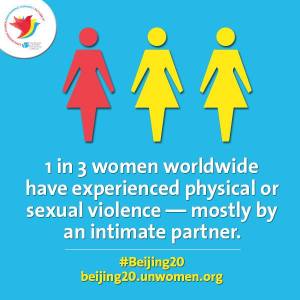
As I began researching I was shocked by the statistics. In Europe a recent study revealed that 1 in 3 women in Europe say that they have experienced physical or sexual violence since the age of 15 by a partner or non-partner. While 45-55% of women have experienced some form of sexual harassment. (EUAFR, 2014)

This is not dissimilar to other global research which has shown 35% of women worldwide have experienced sexual violence in their lifetime. Of which between 20% and 50% of women indicated that their first sexual experience was forced. (World Health Organisation) Although some country figures are shown to be as high as 70% women having experienced physical and/or sexual violence in their lifetime from an intimate partner”. (UN Women)
While further research in Europe shows that only “1 in 3 female victims of partner violence and 1 in 4 victims of non-partner violence report their most recent serious incident to the police or some other service”. (FRA 2014)
For example in Ireland around 33% of incidents are reported in Ireland to the police or another formal authority. (Donegal Rape Crisis Centre, 2012) While 90% of sexual violence perpetrators are known to their victim (National Rape Crisis Statistics, 2011). Such statistics highlight victim’s insecurity over coming forward and the fact that perpetrators are commonly known to them.
Time for social action
The harsh reality of these findings leads me to pose a number of questions:
- Is sexual violence against women being taken seriously?
- Does social attitudes only recognise certain acts and behaviours as sexual violence?
- Why are victims made to feel blame for what has happened to them?
- How should we best support a victim of sexual violence?
Answering these questions may be challenging but in doing so I believe that they could act as the beginnings of a wider social debate which will help to end sexual violence against women.
I strongly believe there is a great need for us to start actively engaging in conversations about the issue, educating ourselves on what sexual violence is and the impact it has on victims. We should not wait to be confronted by it to realise the social, personal and emotional damage it causes.
By engaging in an open conversation we will help break down the negative attitudes and barriers which allow sexual violence to continue and instead start to ensure its prevention.
While we should also know how to support victims of such violence therefore should someone confide in you that they have been a victim of a sexual violence we should know that it is vital to listen in a non-judgemental way, believe them and reassure them of your trust and total confidentiality.
And while you may also find out information and services for the person, you must however let the person decided for themselves what steps legal or otherwise they wish to take. If the victim is under 18 years old however you are obligated to report the incident to the authorities. (Rape Crisis Centre)
If you or any one you know have been effected by sexual violence you can find support with;
Ireland
- Rape Crisis Help Ireland, 24 Hour Helpline on 1800 778888
Northern Ireland
- The Rowan, Freephone helpline 0800 389 4424
Mainland UK
- Rape Crisis helpline on 0808 802 9999
- Rape Crisis Scotland Helpline 08088 01 03 02
- Victim support on 0845 30 30 900
 Women of Life: Strength and Vision in Mostar By
  It can be easy when you arrive in Mostar to become focused on the multiple post conflict development issues like when I first visited in 2013 and the first thing that struck me was the multiple damaged or destroyed buildings avid remaining visions of the conflict. On this visit however I had the opportunity to live with locals and engage in conversations on a one to one level.
 For four weeks I stayed in the family run
  By 2004 with the reconstruction of the Old Bridge (Stari Most) things started to improve for the city and for her family. In the same year her sister gave her an apartment to rent to tourists on the westside, she explained how she would wait at the bus station for tourists and offer them this accommodation.
 On a personal level my afternoon with Beba has been one of great learning about the effect of conflict on women’s lives. While my talk with her demonstrates that regardless of language and cultural differences no matter where we are in the world at the end of the day we are all human beings who have the ability to form bonds over the simplest of things, which in turn allows us to interact and form dialogue which provides personal grow and wider social understanding.
 Unwrapping Conflict